1776 Independence Day T-shirt Design: Graphics & Graphic Templates
When I first opened the 1776 Independence Day T-shirt Design, I was immediately struck by its focused patriotic voice. This is a graphic design asset that leans hard into a specific seasonal niche, and for a seller preparing a 4th of July collection, that focus can be a real advantage. The template delivers a clear message through typography, which immediately tells me it has potential for several product types beyond just apparel. As someone who has built and sold digital products across Etsy, Creative Fabrica, and various print-on-demand setups, I have learned that a design with a strong central theme often performs better than something trying to appeal to everyone. This particular 1776 Independence Day T-shirt Design feels like it was created with a commercial seller in mind, and I want to walk through how I would test it, package it, and ultimately list it in my own shop.
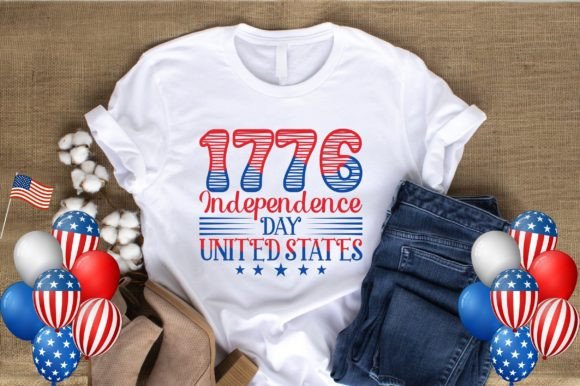
The design comes from Greetings from designdotcom Quotes and presents a 4th of July message with typography as the core visual element. It is described as being of high enough quality for commercial use, and from a first impression, the resolution and clarity look solid for screen printing, sublimation, and digital download formats. The mood is patriotic without being overly cartoonish, which means it could appeal to a slightly more mature audience looking for wearable art or home decor with a vintage or commemorative feel. This is not a playful, cute design for kids; it reads as a statement piece for adults who want to express national pride with a typographic aesthetic. That distinction matters when you are building a product line because it tells you exactly who to target with your mockups and listing copy.
First Impressions and Niche Appeal for Sellers
The 1776 Independence Day T-shirt Design has a bold, typographic personality. It relies on lettering and layout to carry the message, which makes it a versatile candidate for multiple product categories. In my experience, designs that center on typography rather than complex illustrations tend to scale better across different merchandise formats. You can shrink them onto a sticker or enlarge them for a wall art print without losing legibility or impact. This design feels minimal yet strong, with a commercial-grade finish that suggests it was built for production, not just personal use. The visual hierarchy is clear: the date and the patriotic message sit at the forefront, making it instantly recognizable as a 4th of July item.
For a seller preparing a seasonal collection, this asset fits naturally into a bundle with other patriotic graphics, but it also stands alone as a hero product. I could see it working well as a featured t-shirt design in an Etsy shop, as a lead magnet on a print-on-demand storefront, or as part of a larger digital download pack for crafters. The niche is specific, but the execution feels professional enough to attract buyers who are looking for clean, typographic-style patriotic merchandise. That is a sweet spot many sellers aim for, and this design lands there comfortably.
Testing the Design Across Product Categories
Before I publish any listing, I run a design through a series of real-world product tests. With the 1776 Independence Day T-shirt Design, I would start by rendering it on a white t-shirt mockup and a dark heather grey mockup to see how the contrast holds. Typography-based designs can sometimes lose visibility on certain backgrounds, so I always check that the lettering pops without feeling harsh. This design appears to have good weight distribution, so it should work on both light and dark garments, but I would still test it on navy, red, and black shirts to confirm readability. Print-on-demand platforms like Printful or Printify require clean, high-contrast artwork to avoid complaints, and this design seems ready for that environment.
Beyond apparel, I would test the 1776 Independence Day T-shirt Design on a ceramic mug, a tote bag, and a standard 11x14 inch wall art print. Each format places different demands on the layout. On a mug, the typography needs to wrap or fit within a curved space. On a tote bag, the design should hold its own as a standalone graphic. For wall art, the file must scale cleanly without pixelation. Because this is a typographic template, scaling should be more forgiving than a detailed illustration, but I always verify the original resolution before committing to a product line. The description notes that the quality is high enough for commercial use, which gives me confidence, but I never skip the mockup phase.
Using the Design for Digital Products and Printables
One of the strongest selling angles for a design like this is its adaptability to digital download formats. I can see this being packaged as an SVG set for Cricut users who want to cut the design from iron-on vinyl, a PNG file for sublimation on tumblers and coasters, and a printable PDF for instant download wall art. Each format requires a slightly different file structure, but the core design stays the same. The 1776 Independence Day T-shirt Design is clean enough to cut cleanly on a Cricut or Silhouette machine, provided the typography does not include overly thin strokes that could tear during weeding. I would zoom in on the lettering to inspect the stroke weights and confirm that the design is weeding-friendly.
For sublimation sellers, this design could be used on tumblers, ceramic tiles, mouse pads, and even polyester apparel. The typographic style works well on small curved surfaces because there are no fine details that might blur during the sublimation process. I always recommend testing a sample print before listing, but the structure of this design suggests it will hold up well. For Canva template sellers, you could repurpose the layout into a social media graphic or a flyer for 4th of July events, expanding its utility beyond physical products.
Product Presentation and Mockup Strategy
How you present a design on a marketplace listing can make or break the sale. With the 1776 Independence Day T-shirt Design, I would create a mockup set that shows it on a t-shirt, a mug, a tote bag, and a framed print. Buyers want to see how the design translates across formats, even if they only intend to buy one product. A cohesive set of mockups builds trust and signals that the design is professionally produced. I would use a clean, well-lit lifestyle mockup for the main thumbnail and include a white-background version for the second image so customers can see the raw design without distractions.
Thumbnail appeal is especially important for print-on-demand and Etsy listings. The typography in this design is bold enough to read at small thumbnail sizes, which is a major advantage. Many designs lose their impact when scaled down for a search results page, but this one should retain its readability. I would still check the thumbnail at 200 pixels wide to confirm that the date and message are legible. If they are, that is a strong signal that the design will perform well in search-driven marketplaces.
Where the Design Works Best and Where to Be Cautious
This asset works best in applications where the typography can be the star. Large product previews, themed bundles, decorative layouts, and standalone merchandise graphics are all ideal. I would use it as a featured design in a patriotic collection, paired with complementary graphics that share a similar color palette or typographic voice. It also works well for social media promotions during the weeks leading up to July 4th, especially if you create a coordinated set of posts featuring the design on different products.
However, there are a few situations where I would be cautious. If you are planning to use the 1776 Independence Day T-shirt Design on very small products like pins, keychains, or small stickers, the typography may become difficult to read. Complex layouts with multiple text lines can also become problematic when scaled down. I would also avoid placing it on heavily patterned or textured backgrounds where the lettering might compete for attention. Dark backgrounds are fine as long as the contrast is sufficient, but I always test a print sample before committing to a dark substrate. For Cricut projects that require precise cutting, confirm that the SVG file has clean paths and no overlapping nodes that could cause cutting errors.
Practical Seller Notes and File Preparation
Before publishing, I always take the time to organize files clearly for customers. For this design, I would create a folder structure that includes an SVG file for cutting machines, a high-resolution PNG with transparent background for sublimation and digital use, a PDF for printable wall art, and an EPS or AI file for advanced editing. Each file should be named clearly so buyers know exactly what they are getting. I also include a simple instruction sheet with tips for resizing, color adjustments, and recommended printing settings. This extra step reduces support questions and increases customer satisfaction.
Commercial licensing is another critical factor. Before selling finished products using this design, I verify that the license allows for unlimited commercial use on merchandise. The description notes that this is a t-shirt design template of high quality, but I always read the fine print on the marketplace page. If the license is standard for graphic templates, you are typically allowed to use it on physical products for sale, but you may not be allowed to resell the digital file as is. That is standard for most shops, but it is worth confirming so you do not violate terms of use.
Pairing the Design with Fonts and Visual Elements
Since this is a typography-centered design, the choice of font family matters if you plan to customize or extend the template. I would pair it with a bold sans serif font for the primary message and a serif font for any secondary text to create contrast and hierarchy. Script or handwritten fonts could work for accent lines, but they should be used sparingly so they do not compete with the main typography. Display fonts with a vintage feel could reinforce the 1776 theme and give the design a more nostalgic look. If the design already includes embedded typography, I would check that the lettering is converted to outlines to avoid missing font issues for buyers who do not have the same fonts installed.
Building a Collection Around This Asset
One of the smartest moves a seller can make is to build a product collection around a single strong design. With the 1776 Independence Day T-shirt Design, I would create a collection that includes the t-shirt, a matching mug, a tote bag, a throw pillow, and a wall art print. Each product uses the same typographic artwork but is formatted for its specific medium. This approach gives customers multiple entry points and increases the average order value. It also reinforces brand identity and makes your shop look more curated and professional.
For the collection, I would create a unified color palette based on the design's existing colors. If the template uses red, white, and blue, I would stick with those across all products. Consistency in product photography and mockup style also helps tie the collection together. Buyers who see a cohesive set of listings are more likely to trust the quality of your work and make a purchase.
Final Thoughts on Commercial Potential
After evaluating the 1776 Independence Day T-shirt Design, I see it as a solid commercial graphic design asset for sellers who want a clean, typographic patriotic option in their product lineup. It is not overly complex, which works in its favor for scalability across different merchandise formats. The quality appears sufficient for print-on-demand, sublimation, and digital download sales, and the typographic focus gives it a professional edge that should appeal to buyers looking for statement pieces rather than novelty items. As with any asset, the success of the final product depends on how well you test it, package it, and present it to your audience. But as a starting point for a seasonal collection, this design offers a reliable foundation that can be expanded into multiple revenue streams.